It’s not often in life you get to say you did exactly what you set out to do, without any compromise to your vision and execution.
Up front, then, this is in the ‘win’ column. While (also up front) this wasn’t a runaway financial success with groundbreaking attendance, I did precisely what I came to do, and made an impact on the people I did reach. I didn’t attract crowds — as I understand it, I may have set records for attendance, but not in the right direction. The show may have been self-selecting for people who would value the experience, so maybe it’s no surprise that the people who came out loved it, and had incredibly interesting thoughts on their experience trying it. But — from the perspective of did it fill rooms, did I make money hand over fist — absolutely not. In box office terms, it was a stinker.
Which is more validating in a lot of ways than if it had just been kind of middling. How do you know an idea is actually ‘fringe’? People find it unsettling and challenging. So it was a personal success, and I think the Fringe benefited from having something in the schedule that was absolutely nailing the mandate.
On marketing and sales
I’d say I postered as much or more than any other Fringe show; I innovated (there were postcards in cafes, bookmarks in bookstores and little libraries); I made highly viewed (by most shows’ standards) reels on Instagram and got more media than other shows, including two radio interviews and some local press. Even a radio station in Calgary reached out to talk about it. I put a lot of money (well — not a lot of money, but relative to Fringe show promotions, a fair bit) into print material, and ran an Instagram ad campaign for a week before and over the duration of the show.
Everything was received, on balance, quite well (except for a smidge of poster defacing, which we’ll get into later). The Instagram ad performed spectacularly for the budget; if I were still in marketing, I’d look at the numbers and say “that exposure for that kind of spend? Hire this kid!”.
But you can’t sell people something they don’t want. And the Fringe this year was taking place at a community arts centre that sees a certain amount of traffic from people who are there for community arts stuff (including a lot of kids’ activities in the summer), but is out of the way the normal rhythm of downtown life. It’s not a “I’m going to go downtown, grab lunch, check out a Fringe show, maybe stop by the bookstore” kind of experience — you have to drive, take a bus, or cycle / walk with some determination.
It was also $25 a ticket, which I think is a fair price, set by the Fringe organizers, given that a lot of the shows are out of town or have 10-20 people involved, with sets and costumes and taking time off work; spending money on gas to drive here, buying food while in town, etc.
So there were two vectors for a “no:”
- The idea freaks people out and makes them angry;
- It’s out of the way and relatively expensive for what’s happening on paper.
Then you get a collapsing set of nesting circles:
- People who think the idea has merit;
- People who are actively curious about it;
- People who might commit to an attempt at it;
- People who are willing to displace themselves and pay money to do it.
The last category turned out to be a vanishingly small circle.
The Fringe shows that did really well were, on observation:
- Local
- Large casts and crews
- Put on by “theatre people” — highly engaged and active in the local theatre scene
Chatting with audience members at the ‘big’ shows, it was a combination of family and friends of the performers/crew, and a contingent of dozens of people who go to all the shows that they know people in. In return, I’m sure all the people involved in these productions also go to these audience members’ shows.
And this is good stuff! It’s great to see local theatre succeed and people supporting it. I felt happy for the shows I went to that were packed to the rafters, not bad for my own — a solo show with no crew, and no strong connections to the theatre (or any) scene in town.
So even though I’ve largely transitioned out of marketing work, it was still a really interesting exercise in community marketing. It’s hard to sell new things, especially hard if you have no weight in the community you’re selling to, and the level of vague interest in an idea may not manifest in uptake for the idea. Having hundreds of people saying “I love this in theory” and wide media across print and radio, and truly exceptional numbers on social, does not necessarily translate to sales. Every person you reach is a potential sale, so the reach and engagement helps, but getting to the wallet is a very different process than getting to the eyes.
I’m reminded of a lot of very frustrating experiences where I’ve had to market something with no market research other than “people I know thought this would be a good idea,” and was inevitably left holding the bag when the product failed, because it wasn’t “marketed right.” There’s a reason I left that world behind to take on weird art stuff that makes me happy. Like this.
This was marketed “right,” and I’d argue, marketed successfully. The word was out. It didn’t sell. And as a reminder: this wasn’t about big sales, even from the jump. It was about doing this thing I wanted to do and damn the torpedoes.
So the marketing affirmation / learning was an added benefit, not a regret.
On honesty
It crossed my mind, and was also suggested by more than one person, that the show might have done better if it flew under a more duplicitous flag.
Calling it “The Black Box” or “Ruminations” or something. Billing it as an audacious one-man show that redefines theatre. I don’t know, that kind of horseshit. Bill it as a one-person, one-act show (maybe with a twist that audience members must keep secret! Have them sign a waiver at the door!) and then the rug-pull is they wait for something to happen and nothing happens.
I don’t know. It would almost definitely have seen more traffic. Maybe better results. But it just didn’t feel right to me to set people up and the silence be kind of a gag rather than the stated purpose. I change my mind a lot and might loop back around on this at some point, though.
On technical decisions
Being a theatre neophyte in a lot of ways, I didn’t think there’d be a technical director or technician. I kind of thought part of it would be a “well here’s the switch for the stage lights, and the jack for audio to the speakers” and that I’d be responsible for my own show, music cues, etc. But the Fringe actually provided a technician (Chip), and while I came into the tech rehearsal saying this would take five minutes max, we spent a bit of time working through chair / music stand and iPad (my hour-long timer) placement, the balance of light on me, the spectrum of yellow to blue of light on me, how high to keep the house lights, etc. I’m glad they were there.
On the eight shows
First show: August 7
10 attendees; a mix of friends (3), other Fringers (4) and legit ticket-buyers (3)
Fringe attendees included 4 teens, who I thought wouldn’t make it but wound up doing just fine. 1 sleeper, 1 fidgeter (stuff in pockets examined). I was incredibly nervous beforehand, and really wasn’t sure if I could make it, let alone if the audience would. Post-show my question was “clock or no clock” and it was overwhelmingly “clock”. People really wanted that security and a way to mark time. It stayed for the whole run.
Audience reactions: incredibly positive. One person really, really hit the wall at about 40 minutes, and was tremendously proud of pulling through. Another said they hadn’t really sat and thought like that in maybe their whole lives, and it was giving them a new perspective on meditation and introspection.
Personal challenge: hard as hell. I really, really hated it at the 10, 30 and 40 minute mark. I was counting the minutes/seconds right up til the end. I finished the show jazzed that anyone had come, but dreading the next seven. The positive feedback was doubly rewarding because I felt like I’d wasted everyone’s time. One of my cycles of thinking was “boy, I wish they had somebody more interesting to look at.” Which — okay, I’m being a dick to myself, but I think there is something to that. If it were Daniel Day Lewis or Phoebe Bridgers or Jack Black sitting live on stage for an hour doing this, there’d be, well, attendees, first of all, but I think a talented and charismatic performer would bring something to the experience for the audience.
Second show: August 8
0 attendees. Went home and had a nap (it was 1 pm on a Sunday).
I felt really bad afterwards that I didn’t power through in an empty room, but the event director came by to tell me it was a zero-sale with no walkups and asked me if I wanted to see another show’s dress rehearsal down the hall. It was kind of her to offer and in the moment, I felt like saying “I’d rather sit here by myself than see this dress rehearsal” would be kind of dismissive and rude. Then, after I’d fully packed up and was down the hall, I found out the dress rehearsal was being pushed back, and I was kind of out of the commitment zone, so I went home rather than go back and get out the chair, music stand, iPad, turn the lights on, etc. But even so, I feel like I let myself down on this one.
I was also really sad about attendance at this point. I knew in my head / heart that this would be a tough sell, especially at $25 a ticket, but I also had a daffy vision that this might bloom into something where there’d be 20 or so people doing it together, and it was very, very obvious that I’d get a small trickle of friends and a few curious folks. I put a brave face on it — “I’d rather it be a spectacular failure than a middling success” — but it’s still kinda sad when you put something out in the world to mostly thunderous, er, silence.
Personal challenge: n/a
Third show: August 9
5 attendees, including a good friend from Toronto, and my wife. A bit of a cavalcade in terms of the World Outside intruding, including a large laughing fiesta in the hall outside, a stage manager from another show creeping in to grab a piece of equipment, and a woman who opened the door at about the 40-minute mark, said “oh shit,” and shut the door without coming in.
Personal challenge: much like the first, but I found better ‘projects’ to occupy my mind. Clearly identifying a cycle of “train of thought; train of thought comes to a natural conclusion; oh fuck that was only five minutes oh shit I’m going to die up here; new train of thought…”. I still found it deeply unpleasant. The first few minutes, in particular, there’s a nearly literal devil in my mind saying “call it off! Just tell everyone it’s a joke and a mistake.”
Fourth show: August 10
6 attendees; a late show (8:15 PM — for context, I’m usually in bed a little before 9). Three friends, two strangers, one Fringer. One person rolled in about 20 minutes late. Our first legit sleeper: head falling backwards to the point I had spine concerns, their partner trying to gently shake them from time to time without startling them awake. One attendee said it was one of the most profound mental journeys they’d ever had in their life.
This is the one where I decided to tape some of these, just to have something for posterity/for the record.
Personal challenge: still very much about finding projects to occupy my mind. Really working in the last 20 minutes to get my brain to loop on “this is where I’m supposed to be and what I’m supposed to be doing; I don’t need to think about stuff or be productive.”
Fifth show: August 11
With live band The Winter in Canada (guitarist and drummer)! Mark and Eric showed up with a guitar and snare drum, and sat there without playing a note the whole time. Five attendees: partners of the band, good friend, stranger, and a professional acquaintance. After the show, the acquaintance confided in me that her parents had both passed away a few years ago, and given the challenges of work and family she really felt like that night was the first time she’d had since then to start to process the loss. She’d wept a little (silently). That kind of shook me; I was prepared for some jocular conversation, but this was more real than I was mentally set up for. I think I was probably more glib than I should have been.
Personal challenge: not so bad this time. By the end, I actually felt like I wanted to keep going (a first), and was sort of looking forward to the next one instead of dreading it. Having partners on stage was interesting; I had never thought the “performer/audience” dynamic was especially important, and really thought that doing this together was one of the most appealing things about the show. But having two more people on “my side” really felt different than being the person that the bulk of the lights are focused on.
Sixth show: August 13
Three attendees; two friends, one Fringe pass holder. The pass holder had pre-excused herself, saying she needed to pick up her daughter and had to leave 10 minutes before the show ended — then stayed to the end. She was getting a lot out of it and figured she could be a bit late to pick up her daughter. One friend was grateful for the opportunity to decompress after a very busy week of multiple family visits; the other, a doctor, just wanted to see what the experience was like and appreciated the chance to let his mind roam for a while without feeling pressured to do anything.
Personal challenge: this one, I felt like I was much more in the zone. It was still ‘project thinking’ for the first 40 minutes of so, but much longer focus on a single subject, and not as much pressure to churn through a lot of thinking. By the end, I was very comfortable, and actively wishing I could sit for a while longer.
Seventh show: August 15
This was the first show with a fly, which seemed to be very focused on me, but periodically would visit others. Three audience members, but the conversation afterwards went deep, with everyone in there pulling something different from the show. One woman was a self-described talker and this may have been the longest she’d been still in her life, and found that profoundly empowering. Another has treated the whole thing like a play about a silent man, so just observed me intently for the whole time, and as he watched the nothing became profoundly intense, especially given my struggles with the fly. He brought up that as an audience member he was always sitting in silence; so the dynamic shift was really wholly on the stage. Another man found it a deep retreat from some worries he had and managed to turn his mind over the hour from his troubles to trying to imagine what the other people in the room were facing and contextualizing his concerns.
Personal challenge: the fly was a blessing and a curse; it was something that would land on me and give me a few seconds of focus, but also created a stream of “at what point am I sitting dealing with a fly and not sitting in silence” as a rotating concern. There was only one fly in the room, so I did spend some time wondering what was going on in this fly’s life. How had it strayed so far from other flies? What was it hoping to find in this room? In general – this was an ‘easy’ one, and the more I do this the more I find I’m less worried about ‘what am I going to think about, oh no’ and more comfortable just letting thoughts bounce around. There’s the old meditation saw about letting thoughts ‘flow past you’ and this feels like a good fit for that idea…
I regrettably did not record this one! I wish I had. The fly!
Eighth and final show: August 16
Nine audience members; a mix of friends and strangers (two Fringe actors, three friends, three strangers, and the tech sat in for this one). This show was the first one (and last one!) where the stage lights were full and the house lights off; for the first time, I couldn’t see the audience at all and the dynamic was fully “I’m the performer.” This wasn’t planned; I think the technical director was just a bit tired after 12 straight days of Fringe. No fly this time. I kind of missed the fly.
Personal challenge: I thought I’d be introspective and get swept up in the “what did it all mean” thinking, but really, it was what is now a pretty normal set of both practical thinking (I’ve got the film fest coming up, what are the next steps for that) and generally ruminating on All The Things (one thought: if I keep this up on the regular, solo, I’ll probably never need therapy again). But as much I was expecting I’d be thinking about this as a whole project and its weight and meaning in my life… not so much. Still: easier than the first seven times.
On reviewing the tapes:
I don’t think I blink a lot in my regular life, but when I look at the videos of the performance, it looks like I’m trying to slip a coded message to Allied Intelligence under my captors’ noses. Maybe the theatre had dry air? There was certainly a lot of air circulation (you can hear the HVAC going hard, but not really cooling that much). Later shows were partly me thinking “don’t blink” periodically.
On being an interloper:
I’m really not a “theatre person,” at least to the extent that I’m innately excited about the Fringe, even while being in it. I did theatre in high school, I studied Radio & Television Arts at Ryerson (two dead media at a school that no longer operates under the same name; wotta world), but I haven’t been a “theatre guy” since then.
I really liked everyone involved with Fringe personally. Lovely people, clearly dedicated and passionate and brilliant.
But not my people. It’s a hard feeling to pin down, but it was a week of feeling a bit like I was a visitor from a foreign land; even more so than the out of town Fringers, who were mostly also Theatre People. I was working that week without time off and with a pretty crowded personal life already, so I felt actively guilty that I wasn’t “Fringing” and taking in all the other shows. I chatted with a few other folks but they were very much there to Talk About Theatre and all things theatre-related, and I felt a bit like a tire salesman at the ski convention.
It was a great toe-dip into a different world, but I can’t say it awoke something latent in me that makes me want to Do More Theatre. Oddly, it’s rekindled an interest to get back into radio stuff — that’s more my zone, my people.
On the dollar cost and what performances are “worth”:
There was pushback on this being $25 to attend — the price was a uniform cost for all Fringe shows (there were bulk tickets and passes etc., but the ad hoc cost was $25 for any show). One person even walked around town with a pen and Sharpie just to write on posters about how mad they were. For one poster they wrote on it in pen then came back later with a Sharpie to add more. Which I can’t even get upset about. It’s kind of awesome.
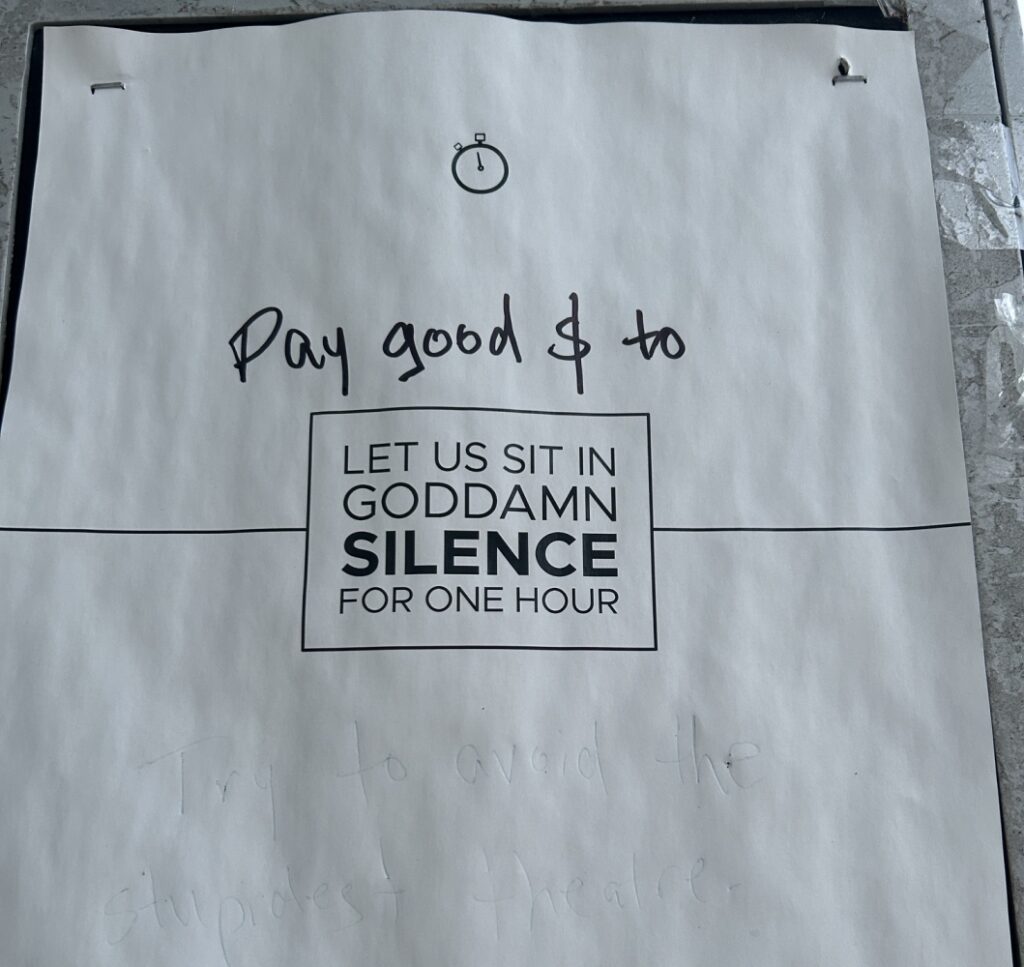
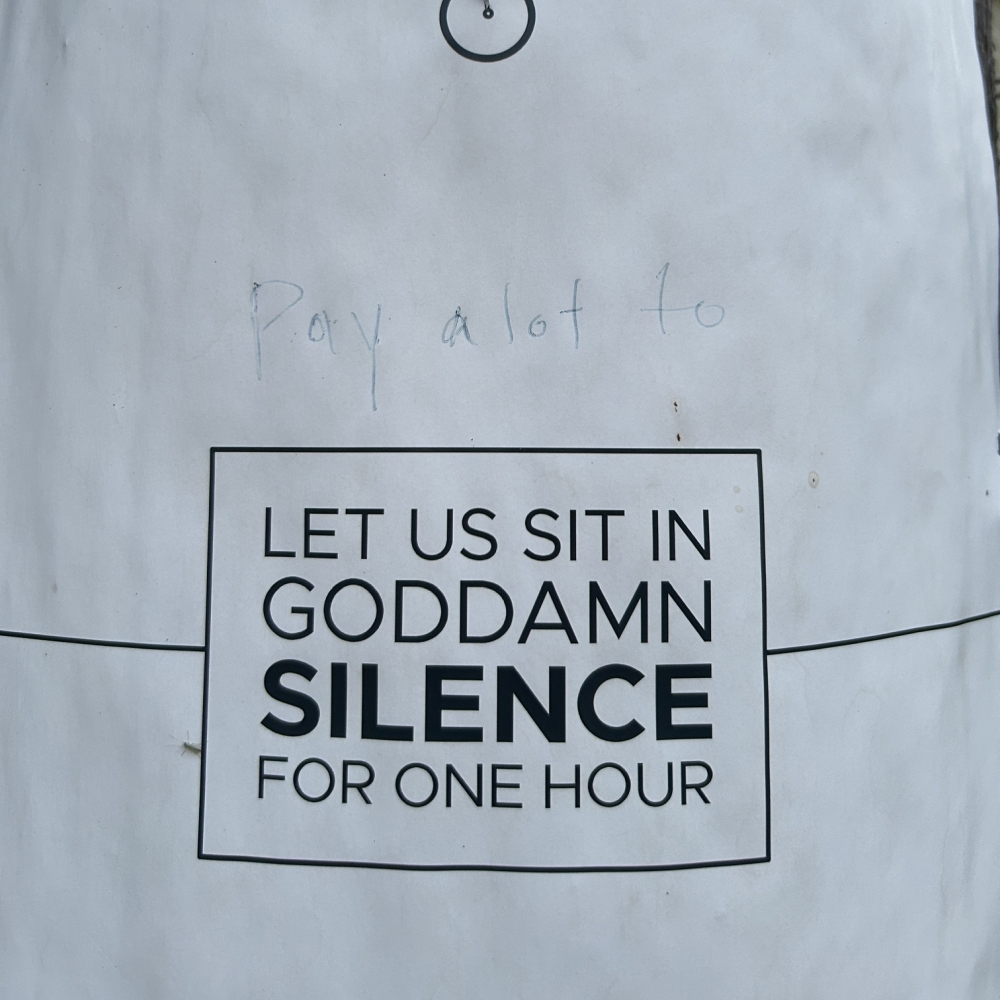
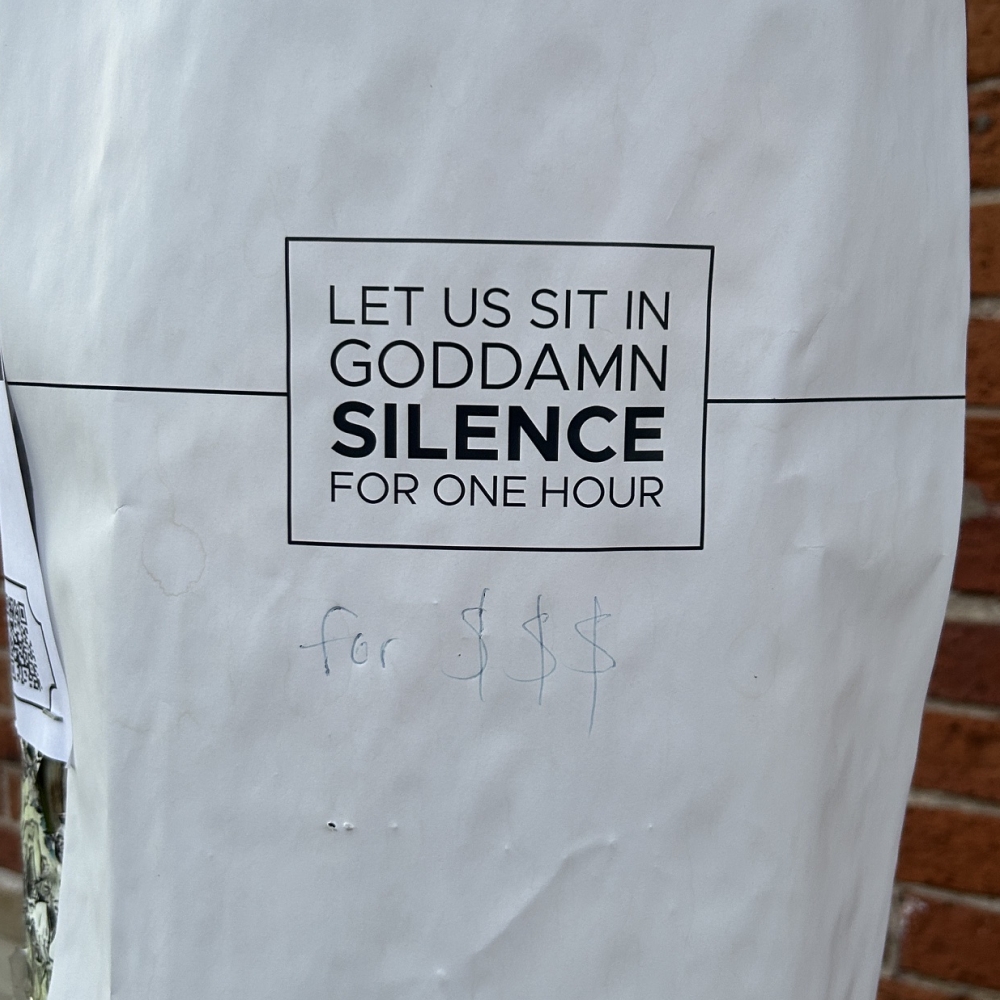
My initial reaction: yeah! I wouldn’t have paid for this if I weren’t doing it or connected to somebody doing it. The pricing structure makes sense overall, and uniform pricing makes sense overall, but even if I’d refused any “cut” (and that would have been a logistical nightmare for an operation that’s functionally one woman managing a lot of interns and part-time help) the ticket price still would have been higher than I like.
But then I started thinking more about why this is something that really triggered people.
I know people who have paid over $1,000 to sit at a Taylor Swift concert, far enough away that she’s a dot on the horizon, watching her perform on televisions in the arena. I know people who’ve paid hundreds of dollars to go to the opera or the ballet.
Conversely, instead of paying for a concert ticket, I can sit at home and listen to an album, or watch a video of an opera or the ballet, for next to free. So why pay to go to these things? Why go to the movies when I have Netflix at home?
And so on.
What’s a performance worth? An experience?
$25 to do nothing for an hour does seem ludicrous on its face. That was even my gut reaction. But when you start working through the difference between this and any other show… if you reverse engineer “I shouldn’t pay $25 to watch a show where somebody neither moves or speaks,” you start to go down a different and interesting set of questions. What’s the unit value of a word, or a gesture? If I’d danced silently for an hour I think the show would have been even less popular, but I don’t think I would have gotten the how daaaaaare you reaction. If I’d said a single word, would that mean the show is worth more? How many words would I have to say? Is a play with more words worth more than a play with fewer words?
That’s a line of thought that leads to the most expensive concert on earth being Aesop Rock rapping lots of complicated words really fast over an orchestra, and solo performers starving to death. That’s weird.
The cost “debate” has really made me more aware of what people are willing to pay (or not) for entertainment, and open to question what qualifies as “worth” money to have an experience.
Because it’s the experience, right? It has to be that. It can’t be value based on word count or gestures or the number of performers. So people will pay for an experience. If that experience is watching Taylor Swift on a TV in a giant space with 10,000 other people also watching Taylor Swift on a TV, that’s cool. If the experience is hearing a guy read poetry he wrote himself, that’s also cool. But the core recurring idea is that people are willing to pay something for experiences.
So I’ve kind of 180’d on the cost thing. Sure, it cost about the price of two combo meals at a fast food chain. But it’s an experience you won’t have anywhere else that exists at a single point in time in a place. Nobody else will (likely) ever put on this type of show in your lifetime. Is that worth $25 lousy bucks? I’ve kind of come around to ‘yeah’.
Obviously not worth that to other people, which is also cool. I would never spend a thousand dollars to watch Taylor Swift on a television. Frankly, I’d rather sit in silence for a goddamn hour, which brings us right back to where we started.
But what is an experience worth to you? What factors make an experience worth more, or less? Is it contact with fame? Uniqueness? Exoticness? I’d love to know what turns something into something you’d pay for. Maybe pay a lot for.
What did I learn about myself?
I’m proud of myself.
There were a lot of exit ramps from this thing. I didn’t have to submit to Fringe, I didn’t have to accept the pull when my name was drawn, I didn’t have to commit to the idea (I could have done anything for Fringe), I didn’t have to do all the shows (at least one Fringe show backed out of half their shows), I didn’t actually have to be silent.
I didn’t have to work as hard as I did to get the word out; I didn’t have to pay for all the print stuff or the Instagram ad, didn’t have to take media calls.
I did all these things because I wanted to give this the best shake possible: do exactly what I set you to do without compromise.
And I did.
The other question: did I change?
I think I did. I’ve bounced off meditation many, many times over the years, and never made a consistent practice last more than 5 minutes a day. I kept trying to ease in with smidges of time and build up.
I think maybe I needed to just go hard.
Even by the “easy” performances at the end, I was still in a mental state of chattering for the first 5 minutes, and hitting walls at around 20, 30, and 50 minutes. By 6 through 8, I could legitimately feel my brain settling into a flow state, a kind of “no thoughts, no worries” pattern in the last 10 minutes.
So if I keep this up — once every few days, maybe, in the morning before anyone else in the house is up — maybe I can actually get to a point where I can get to the peaceful mind sooner, and cut the monkey-mind chattering back a lot.
I’m going to try to keep the practice up. Not sure when, exactly, but if I found time to displace myself and do this eight times in 11 days, surely I can find the time to do it at home once or twice a week.
(I’ve thought about Quaker meetings; there’s one in my area. But Sunday mornings are a bit tricky for me, and even though they’re welcoming of people who are not-religious on the surface, I don’t think I’m ultimately comfortable going to what amounts to a Christian gathering regularly. Even if they’re nice folks. It’s also not ‘silent’ [people can be ‘moved to speak’] and the thinking is guided toward the ‘still small voice of God,’ which — see above)
Third thing: I think it made a difference to others, which is fantastic. Feedback from people who were at the shows was tremendous. I have three invitations to have lunch with attendees and talk more about it. It made a big difference to a few people, which I’m grateful for.
Will I do it again?
Probably not.
I think the idea COULD scale but it would take celebrity power, or somebody with an insane amount of charisma, to pull it off with the kind of audience volume that I think would make it really work well.
Again, I change my mind a lot. The real answer is ‘maybe’. I might see if I can pitch it to another Fringe, in a bigger city with maybe a bigger pool of people to draw from. Maybe, though, what I’ve experienced here of it being at least partially a semi-closed community loop will repeat elsewhere. I’m really not sure.
The other idea that’s been rattling around my head for a while, if I want to Fringe again. Maybe even more fitting for the zeitgeist. Who knows?